
Greyscale illumination with the Polygon



Many applications in spatial biology and materials science require patterned illumination delivered at varying intensities across a specimen or material, what is commonly termed “greyscale”. These include imaging applications such as structured illumination microscopy, materials/manufacturing applications such as 3D printing with photopolymerization, and bioscience applications such as visual neuroscience. Mightex’s Polygon DMD Pattern Illuminators, in conjunction with our PolyScan software, can be configured to deliver nuanced greyscale projections via easy and intuitive design tools. Here we will provide a brief, simplified explanation of how the Polygon produces grayscale illumination and how you, the user, can implement this feature in your experiments.
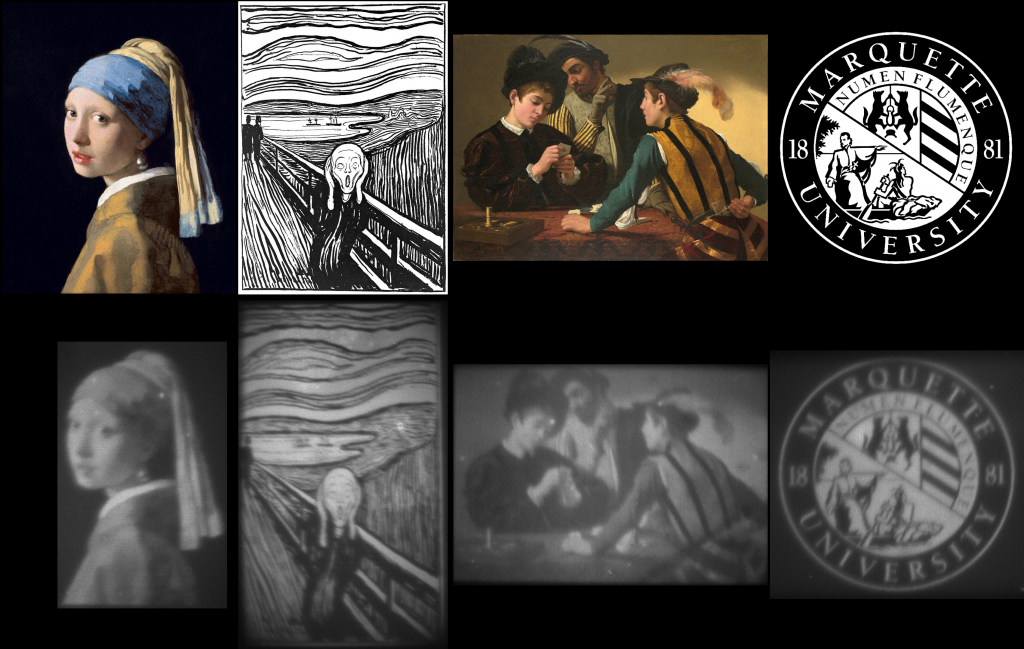
Figure 1. Mark Mitmoen (Department of Chemistry, Brandeis University; Supervisor: Dr. Ofer Kedem) used the Polygon’s greyscale capabilities to photocatalyze the binding of fluorescent compounds to a substrate to recreate highly nuanced images.
The Polygon receives spatially homogenous widefield illumination, so greyscale must be produced within the Polygon via spatiotemporal modulation of the DMD array. But the mirrors in the Polygon are individually binary (ON or OFF), so how can this system produce a range of grey levels simultaneously across an XY plane? There are two broad approaches:
Greyscale patterns can be generated in the spatial domain via spatial halftoning. Mirrors aimed at an ROI are activated in a binary pattern (such as a checkerboard or lattice), with the fraction of “ON” mirrors corresponding to the intended % Intensity. Provided the ROI contains a sufficient number of repeats of the halftone pattern, the pattern will be spatially averaged such that the ROI “experiences” grey illumination. Although this approach results in a minimum size for each individual grey ROI to avoid “checkerboarding” artifacts, the ~1 million individual mirrors in the Polygon provide substantial headroom to avoid this spatial limit for the majority of applications.
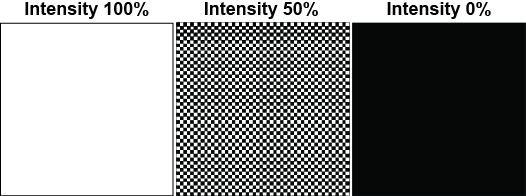
Figure 2. Illustration of spatial halftoning.
Greyscale patterns can also be generated in the time domain via pulse width modulation. This approach can be especially useful for patterns with extremely fine spatial details, because a grey value can be generated on a single DMD mirror by modulating its duty cycle. If mirrors are “dithered” on- and off at sufficiently high frequencies (the Polygon is capable of up to ~6000 Hz), the pulsed illumination reaching the specimen will be time-averaged. If the pixel groups in adjacent ROIs are dithered with different duty cycles, a spatial pattern of variable intensities can be achieved across the Polygon’s FOV.
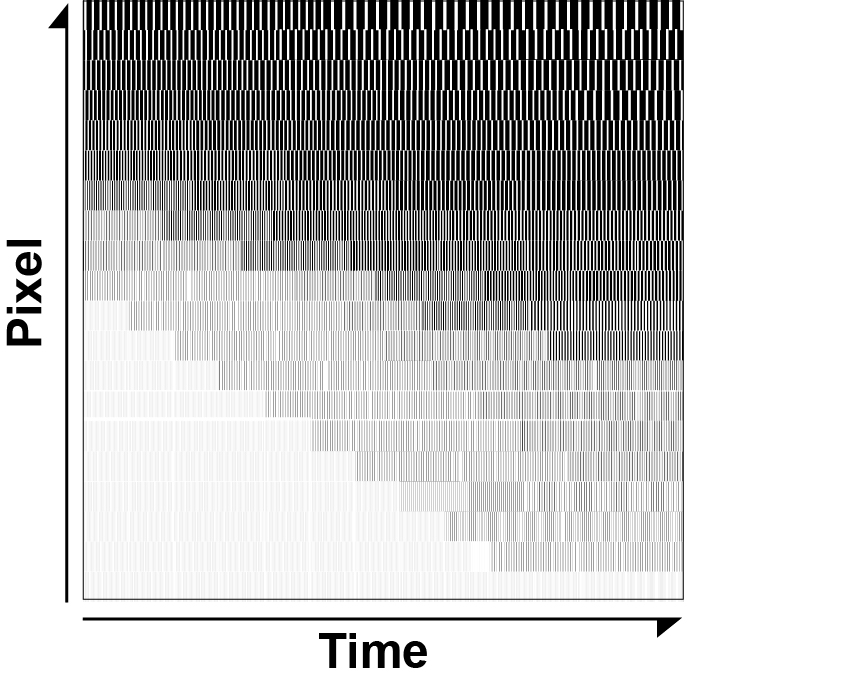
Figure 3. Illustration of pulse width modulation.
Although the underlying methodology to produce greyscale with a DMD is complex, Mightex’s PolyScan Pro software makes greyscale photopatterning easy! Simply draw an ROI, edit the % Intensity, and PolyScan will implement the algorithms under the hood. These simple tools can be used iteratively to generate highly nuanced patterns, such as a smooth gradient across a pattern via multiple ROIs at different % Intensity.
If you would like to learn more about how Mightex customers have implemented greyscale photopatterning in different research applications, we encourage you to click the following links:
https://www.mightexbio.com/mightex-research-award-3rd-place-mark-mitmoen-marquette-university
To learn more about the Polygon and its features, click here or contact our customer support team.