



in Behaving Animals Reveals cAMP-Dependent Neural Circuit Activity
Underlying Hippocampus-Dependent Short-Term Learning and Memory
Published on 2025/12/08 Research powered by Mightex’s OASIS Fiberscope 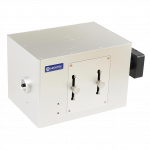

This research was recently presented by Jayant Rai at the Society for Neuroscience (SFN 2025) in in San Diego, California, USA and was supported by a Mightex Travel Award to promote scientific communication and sharing of research using the Mightex OASIS Fiberscope. Congratulations to Jayant Rai! We can’t wait to see more from this exciting project!

The spatiotemporal organization of neuronal population activity is critical for hippocampus-dependent learning & memory. However, the molecular mechanisms underlying the coordination of CA1 neuronal activity and their task-related dynamics remain unclear. Here, we investigate the role of cAMP (adenosine 3′,5′-cyclic monophosphate) signaling to regulate CA1 neuronal activity during hippocampusdependent spatial learning & memory by cAMP manipulation and fiber-based calcium imaging in freely-behaving mice. cAMP is a ubiquitous secondary messenger that mediates sensory transduction and neuromodulation.
We previously reported a rapid cAMP function to enhance the spatial propagation of depolarizing field potentials across murine hippocampal slices, suggesting cAMP may serve to enhance neuronal population activity for memory. To characterize the role of cAMP for hippocampusdependent spatial learning & memory, we virally expressed the light-sensitive enzyme PAC (Photoactivatable Adenylyl Cyclase) or constitutively active enzyme PDE4cat (Phosphodiesterase 4) in CA1 neurons in freely-behaving mice for cAMP enhancement or suppression, respectively, during the object location test (OLT) and contextual fear conditioning (CFC) test. In the OLT, we observe that cAMP suppression results in a significant memory deficit while cAMP enhancement during training (but not testing) promotes the displaced object preference, indicating a cAMP function critical for encoding of short-term spatial recognition memory.
In the CFC test, we utilize a Dox inducible activity-dependent expression system to specifically express PAC or PDE4cat in CA1 neurons activated during CFC. After 24h, we assayed the effect of cAMP manipulation during exposure to the spatial environment (context). We found a significant reduction in freezing behaviour with cAMP suppression compared to control, suggesting that cAMP is critical for context-dependent fear memory retrieval. To directly examine how cAMP may affect CA1 population activity during OLT and CFC test, we recorded the CA1 neuronal response profiles by in vivo calcium imaging in freelybehaving mice. We found similar frequency and duration of neuronal calcium activities between the control and cAMP suppression groups, however, the organization of latent neuronal population states was perturbed by cAMP suppression, suggesting that cAMP may regulate CA1 population activity underlying spatial memory. Further, we will discuss our approach for combined calcium imaging and cAMP optogenetics in the same animal to directly interrogate the effect of cAMP perturbation on CA1 population dynamics during learning & memory.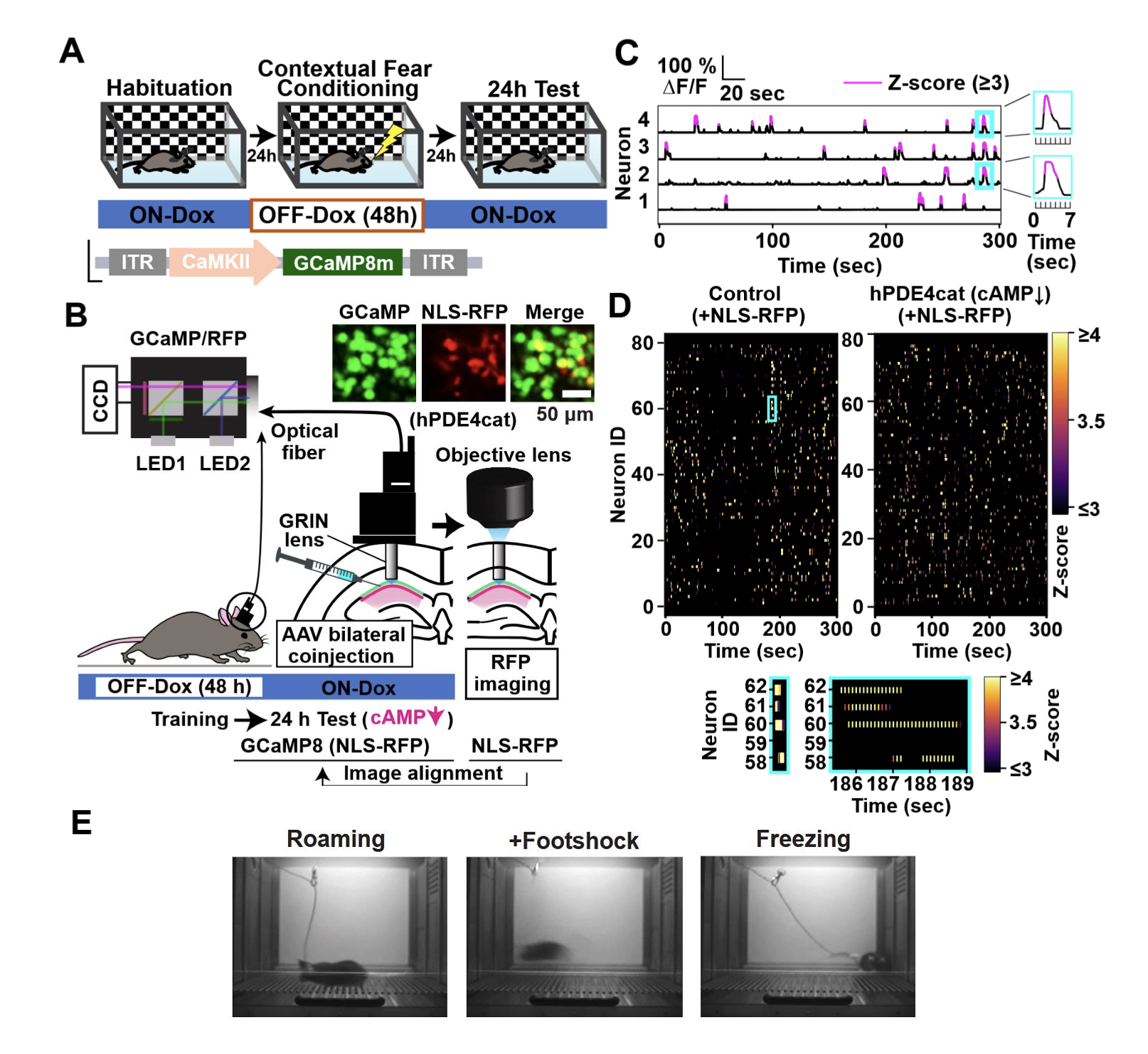
Figure 1. In vivo fiber-based calcium imaging during contextual fear conditioning using the Mightex OASIS Fiberscope system.
(A) Schematic for the contextual fear conditioning (CFC) assay. GCaMP8m was virally expressed in CA1 neurons under a CaMKIIα promoter. Dox-inducible activity-dependent expression of a mutant phosphodiesterase was used for cAMP suppression in CA1 neurons activated during CFC.
(B) A schematic of in vivo Ca2+ imaging during contextual fear memory retrieval test.
(C) Sample traces of in vivo Ca2+ activity during contextual fear memory retrieval test. The red line indicates the threshold for calcium activity (≥ 3 z-score).
(D) Top: Heatmap for sample activities of the NLS-RFP positive neurons (≥ 3 z-score) across time during contextual fear memory retrieval test in a control and cAMP suppression mice. Bottom: Expanded plot from the blue square showing z-score traces over a 3-second window obtained by 10 Hz imaging.
(E) Representative images of mouse behaviors during the CFC assay.
Author: Jayant Rai
Bio: PhD Candidate in Molecular Genetics (Neuroscience) at the University of Toronto, Canada
