
Practical Solutions for Multi-site Fiber Photometry



Cognitive processes and neural representations are often distributed across multiple brain regions that share anatomical and/or functional connectivity. This fundamental property of nervous system organization means that complete mapping of a circuit entails the comparison of signals across regions. Fiber photometry is among the easiest and best-suited methods for performing multi-region recording, as it facilitates the implantation of multiple recording probes across the brain that can optically target genetically-defined cell populations via fluorescent biosensors. Perhaps most importantly, fiber photometry enables all of this to be done in freely-behaving animals such that multi-region neural activity can be correlated with a wide variety of naturalistic behaviours.
Individual fiber optic implants require minimal cranial real estate, allowing parallel implantation of multiple probes across the brain. Moreover, camera-based photometry systems such as Mightex’s OASIS Photometry system offer the freedom to scale the number of recording sites simply by adding additional fiber furcations, with no additional hardware required. In addition to multi-region recording, the OASIS Photometry system can also be equipped with fiber core-specific optogenetic stimulation at a variety of wavelengths. Combined, these capabilities enable more complex experimental designs, such as bilateral recording and stimulation, in vivo anatomical projection-mapping, and functional connectivity mapping across multiple nodes in a circuit.
However, multi-region fiber photometry can still present some additional hardware-related challenges, particularly when paired with behaviour. This boils down to two main challenges:
The challenges above are not insurmountable, however! Here, we will describe the range of Mightex solutions to scale beyond single-site photometry to record (and manipulate) circuits distributed across multiple brain regions:
Firstly, it is important not to overstate the challenges involved in multi-region fiber photometry. Very often – and perhaps even in most cases – it can be performed with the same basic components as single-site fiber photometry. The level of difficulty will depend on the specific experimental context and animal model.
Many multi-region photometry experiments will examine combinations of brain areas in which fiber cannulae can be implanted several millimeters apart. In cases where two recording sites do have tighter spacing, one potential workaround is to implant the fiber cannulae at an angle, such that the indwelling fiber tips can target closely-adjacent regions while still leaving enough space at the distal ends to easily connect/disconnect the patch cords and mating sleeves.
As it pertains to rotation compensation, the effect of patch cord twisting on animal locomotor activity may not actually confound the scientific questions at hand for a few reasons:
Accordingly, we find that many Mightex customers are able to perform standard behavioural experiments without encountering significant technical problems or scientific confounds resulting from patch cord twisting. Furthermore, this standard configuration is highly amenable to high-throughput, multi-animal experimental workflows.
Some fiber photometry experiments might aim to acquire very high-density recordings of neural activity in, for example, hippocampal subfields. The density of recording sites for such an experiment presents the dual challenge of minimizing tissue damage in the region, as well as achieving sufficient spacing to allow the connection of multiple optic fiber patch cords to their respective implants.

Figure 1: Mightex’s Multi-site Photometry probe enables high-density access to brain regions too tightly-spaced for traditional optical fiber cannulae. For experiments involving only a couple of regions, it is also possible to implant fiber cannulae at an angle.
The Mightex Multi-site Photometry Probe (visible on our OASIS Accessories webpage) allows high-density, multi-site recordings with just a single implant! The implant consists of a 12×6 array to allow customized placement of individual fibers, each with a diameter of 125 µm and a lateral spacing of 250 µm. The lengths of the individual fibers are customizable and are manufactured to provide consistent light transmission efficiency and implantation depth across experimental subjects.

Figure 2: The Multi-site Photometry Probe relays fluorescent signals from multiple sites via a single indexed fiber patch cord.
The array connects to a single multi-core optical fiber patch cord with an SMA connector. Individual signals from all fiber cores can be collected simultaneously using our standard OASIS Photometry system with no additional tabletop hardware required. Additionally, optogenetic stimulation can be directed into each fiber core independently using our Compact Mini-lasers (learn more about Mightex’s optogenetics solutions here). Up to 7 experimental subjects can be recorded and stimulated simultaneously.
In some contexts, researchers may be concerned about the effects of patch cord twisting on animal locomotor activity. There could be cases in which any amount of patch cord twisting represents a significant practical hurdle or a potential scientific confound. Mightex’s OASIS ROAM contains an innovative optomechanical system that allows free 360° rotation of a multi-furcated fiber patch cord while providing a stable FOV, allowing twist-free recording of multiple regions in a single animal. Not only does this allow the collection of photometry signals from multiple, revolving fiber cores, it even enables the same independent, core-specific optogenetic stimulation available with our standard OASIS Photometry system. Importantly, the OASIS ROAM also offers the same flexibility for reconfigurable spectral combinations, and can transmit any excitation wavelengths for imaging or optogenetics.
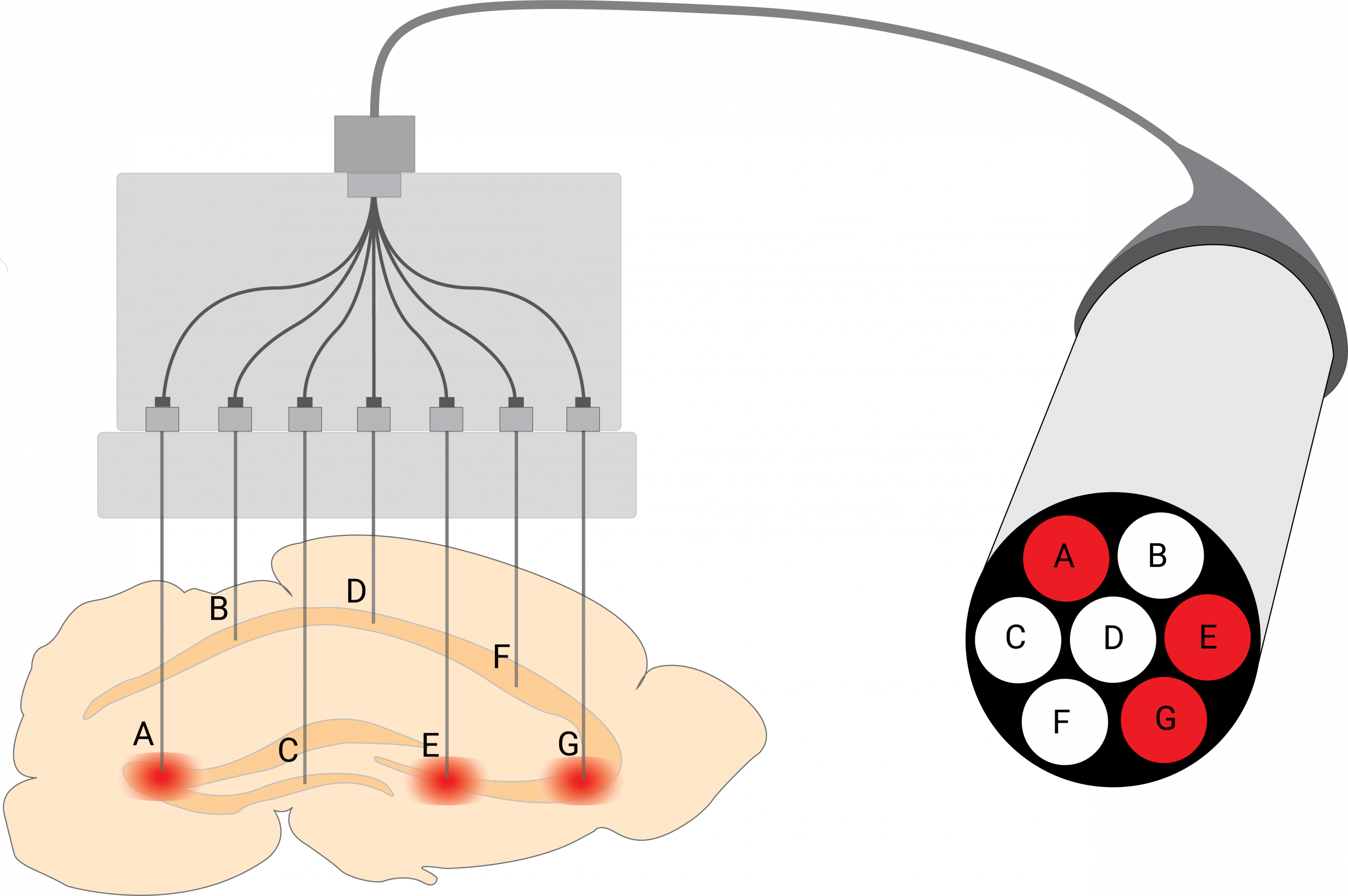 Figure 3: Individual 125µm fibers are fixed in a 12×6 array with 250µm spacing, with customizable lateral positioning and lengths.
The combination of multi-site fiber photometry and core-specific optogenetics offers the possibility of some truly complex experimental designs. Mightex’s hardware and software enable the development of closed-loop pipelines. Through the use of TCP/IP connections, our software can communicate with external software scripts to process real-time signals and return activity-dependent optogenetics triggers. Patterns of activity in one brain region can be used to trigger optogenetic stimulation to another brain region.
With Mightex’s OASIS Photometry system, users can perform multi-region recording with up to 3 biosensors plus isosbestic. Thanks to our camera-based design, a single LED can provide imaging excitation light to as many as 19 fiber cores, allowing users to increase the number of recording sites without the need to add additional excitation light sources. Our standard solutions include excitation wavelengths for green, red, and far red biosensors. We also offer a wide array of other LED wavelengths and beam-combining optics to accommodate novel biosensors with unique spectra. The modularity of our components enables easy integration of new wavelengths with existing systems.
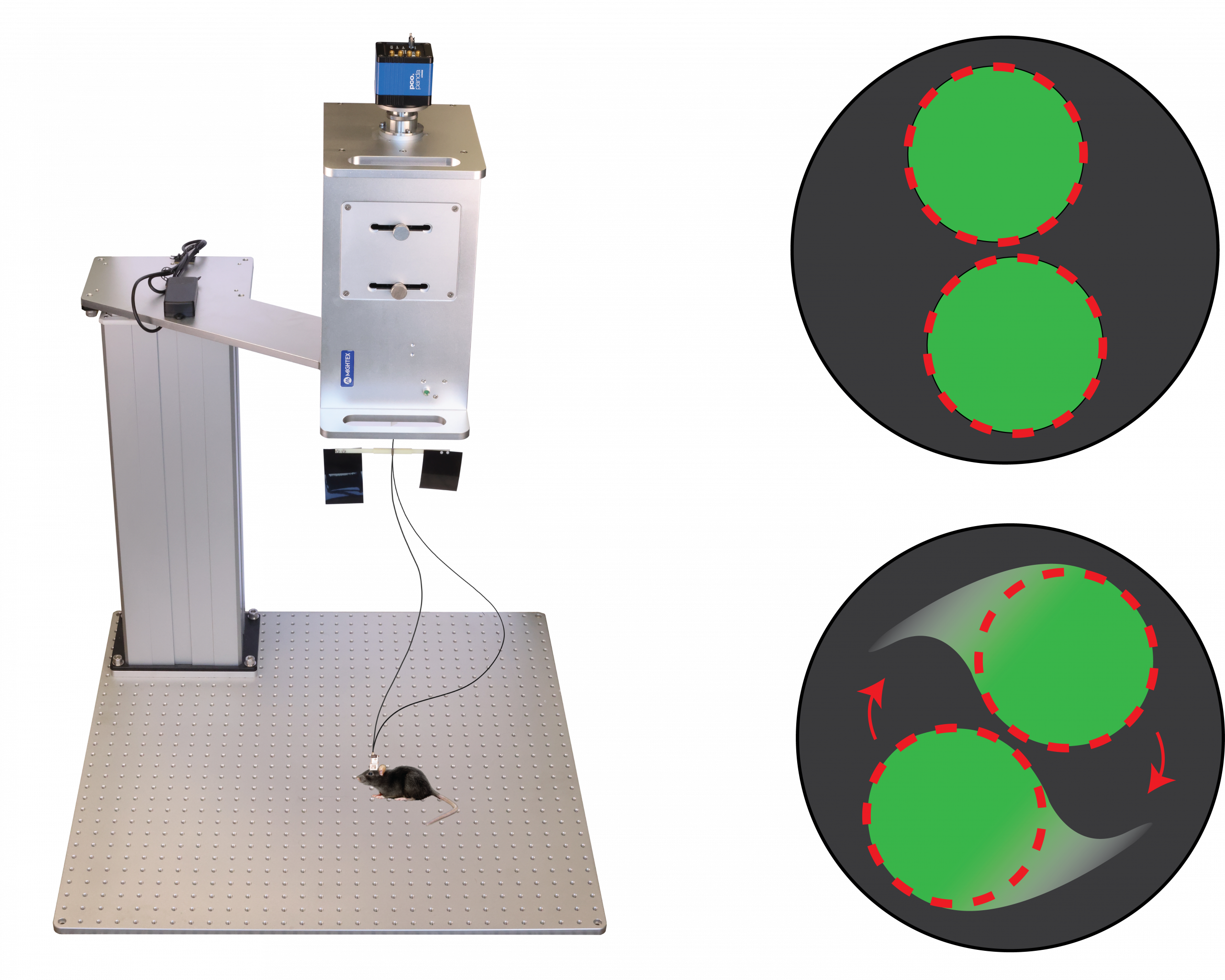 Figure 4: Ordinary rotary joints revole around a central axis of rotation, meaning that multiple fiber cores would travel in- and out of their respective camera ROIs. The OASIS ROAM solves this problem with an innovative rotation compensation mechanism that maintains a stable FOV while allowing 360° rotation.
If you would like to learn more about our solutions for multi-region fiber photometry and optogenetics, you can do so by contacting us any time at sales@mightex.com or by submitting a Contact Form on our OASIS Photometry webpage.