


Optogenetic Study of Prefrontal Circuits in Grin2a Mice with the Polygon

Hassan Hosseini is a Master’s student at the University of Michigan, specializing in pharmacology and neuroscience, and works with Prof. Kevin S. Jones in the Department of Pharmacology. His research investigates how disruptions in neural circuitry contribute to schizophrenia, focusing on working memory, emotional regulation, and decision-making, using multi-electrode arrays, optogenetics, and closed-loop perturbation in Grin2a mutant models. His work uses Mightex’s Polygon1000 Pattern Illuminator, PolyEcho and PolyScan software.
Research Highlights
Grin2a Dysfunction Impairs Cognitive Flexibility by Disrupting LC Modulation of mPFC Circuits(4th Mightex Research Excellence Award, 2025)

Research Summary
This study investigated how the loss of the Grin2a gene, which encodes the GluN2A subunit of NMDA receptors, affects working memory and hippocampal function in mice. Using behavioral tests (8-arm radial maze), Hassan and his team found that Grin2a-deficient mice had impaired spatial working memory.
Electrophysiological recordings of the Grin2a-deficient mice showed disrupted theta-gamma oscillation coupling in the hippocampus, a pattern important for memory processing. Additionally, the mutants had an abnormal increase in parvalbumin-expressing interneurons, leading to an imbalance in excitatory and inhibitory (E/I) inputs to pyramidal neurons.

This imbalance may underlie the observed memory deficits. Overall, the study emphasizes the essential role of GluN2A in maintaining hippocampal network stability and cognitive function, with implications for disorders like schizophrenia and epilepsy.
Mightex’s Contribution
Using Mightex’s PolyEcho and Polygon, Hassan and his team were able to deliver highly precise and targeted light stimulation to specific engrams within the brain. This level of precision and real-time control facilitated by our PolyScan software allowed them to modulate neural activity dynamically, enabling deeper investigation into the functional connectivity and dynamics of the hippocampal circuits.
Mightex’s technology enhanced the resolution and flexibility of the experiments, contributing to the broader goal of developing potential therapeutic strategies for neuropsychiatric disorders.

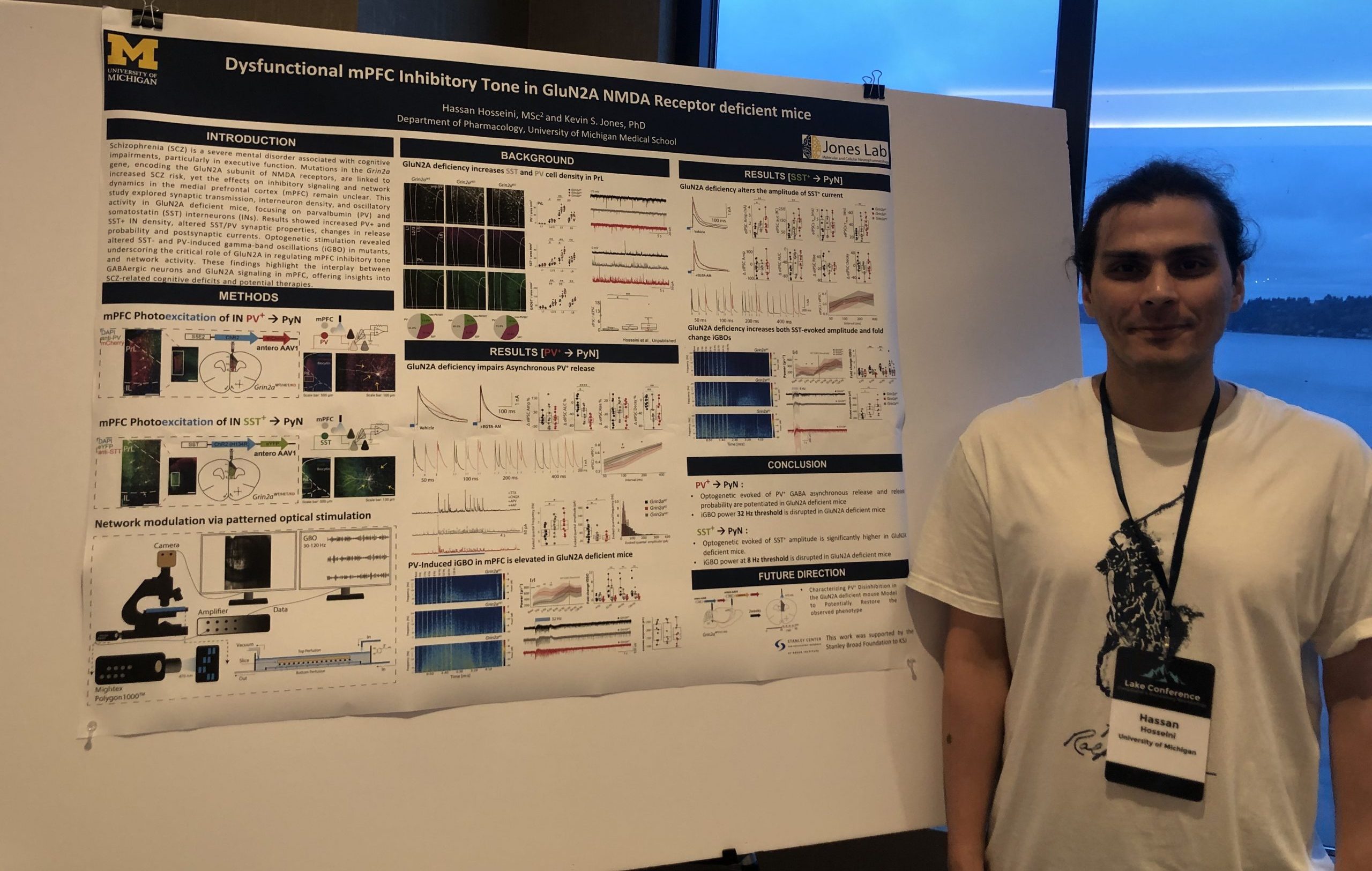
Noradrenergic Modulation of the Prefrontal Cortex Is Impaired in Grin2a Mutant Mice(Mightex Travel Award, SfN 2024)
Schizophrenia is characterized by profound cognitive deficits, particularly in executive functions, which remain largely unaddressed by current pharmacological treatments. Recent research has implicated the GRIN2A gene—which encodes the GluN2A subunit of the N-methyl-D-aspartate receptor (NMDAR)—as a significant risk factor in schizophrenia. This finding suggests that loss-of-function mutations in GRIN2A may disrupt neural circuit functions crucial for cognition. The medial prefrontal cortex (mPFC) is a critical hub for cognition and is strongly modulated by noradrenaline (NE).
In this study, we utilized Grin2a mutant mice to explore the role of NE in mediating oscillatory activity within the mPFC. We employed optogenetic stimulation of locus coeruleus-noradrenergic (LC-NE) terminals in ex-vivo mPFC slices. We used planar multi-electrode array and patch-clamp electrophysiology to monitor the resultant neural activity, namely high-frequency oscillations (HFOs) and theta-gamma phase amplitude coupling (PAC). HFOs are rapid neural oscillations associated with cognitive processing and memory formation. Phase-amplitude coupling (PAC) is a mechanism thought to coordinate neural communication and cognitive processes across the brain, and theta-gamma phase-amplitude coupling (PAC) is crucial for coordinating cognitive processes. Aberrant HFOs and PAC, common in schizophrenia, likely reflect underlying neural disruptions. Aberrant HFOs and PAC are observed in schizophrenia patients, potentially reflecting the underlying disruptions in neural circuitry that contribute to cognitive deficits.

Our results indicate that NE significantly enhances HFO power in wild-type mice (98.3 %, SD: 35.0 %), compared to heterozygous and knockout Grin2a mutants (HET: 30.8%, SD: 27.1%; KO: 76.8%, SD: 23.8%; F=12.4, p=0.00022). Furthermore, NE’s role in strengthening PAC was found to be dependent on the function of GluN2A-containing NMDARs, a finding that we confirmed in WT tissue using subunit-selective NMDAR antagonists. Our findings suggest that disruptions in NE signaling and GluN2A functionality could underlie some of the cognitive deficits observed in schizophrenia, offering potential targets for therapeutic intervention.
This research advances our understanding of the neurophysiological mechanisms underlying schizophrenia and provides a foundation for the development of novel treatments aimed at restoring cognitive function in affected individuals.
This study used the Mightex Polygon1000 to target 470nm LED light in slice preparation in order to target activation of PV+ and SST+ interneurons in the mPFC.
Dysfunctional mPFC Inhibitory Tone in GluN2A NMDA Receptor Deficient Mice(Mightex Travel Award, Lake Conference 2024)
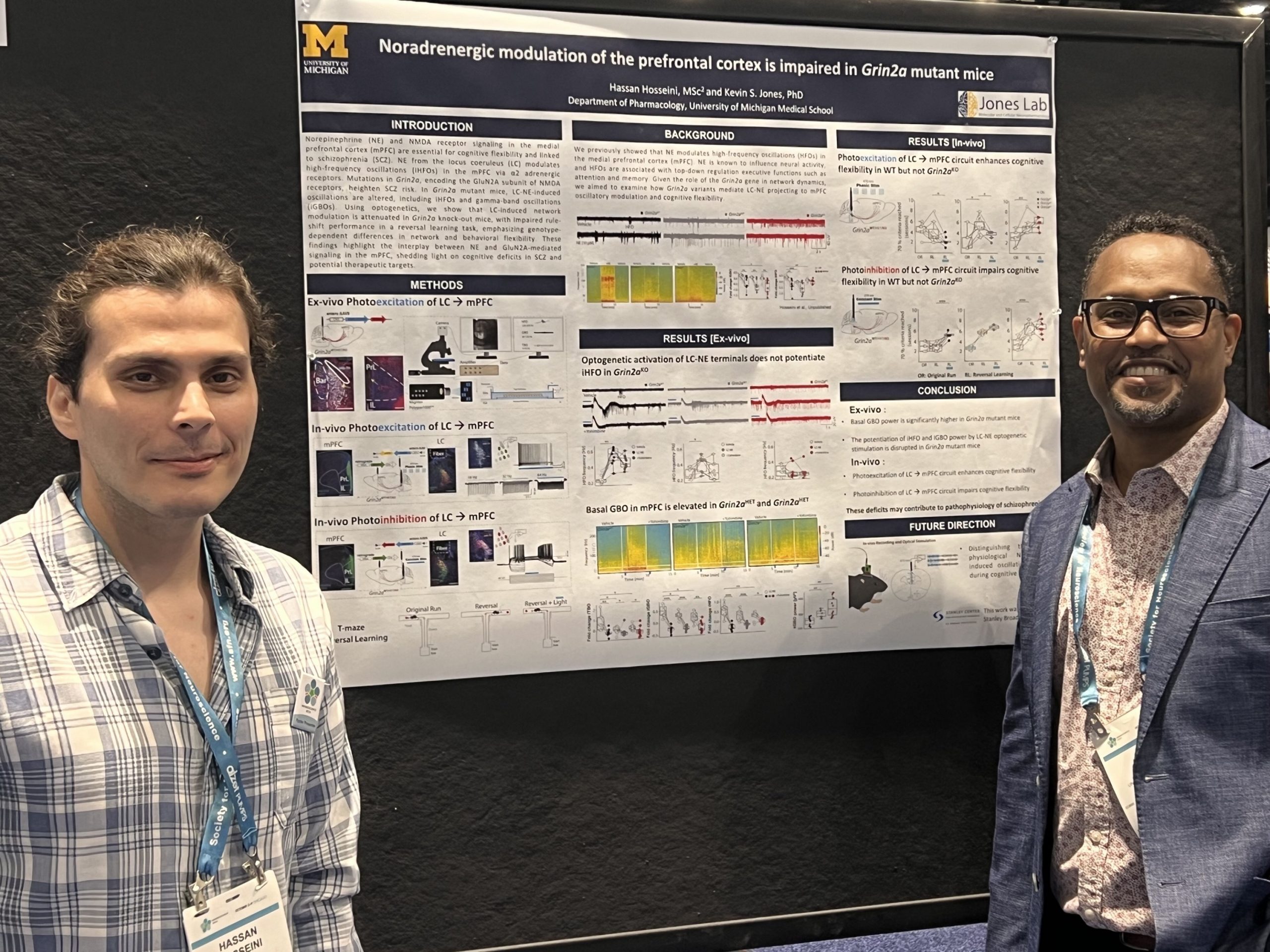
Schizophrenia (SCZ) is a severe mental disorder associated with cognitive impairments, particularly in executive function. Mutations in the Grin2a gene, encoding the GluN2A subunit of NMDA receptors, are linked to increased SCZ risk, yet the effects on inhibitory signaling and network dynamics in the medial prefrontal cortex (mPFC) remain unclear.
This study explored synaptic transmission, interneuron density, and oscillatory activity in GluN2A deficient mice, focusing on parvalbumin (PV) and somatostatin (SST) interneurons (INs). Results showed increased PV+ and SST+ IN density, altered SST/PV synaptic properties, changes in release probability and postsynaptic currents.
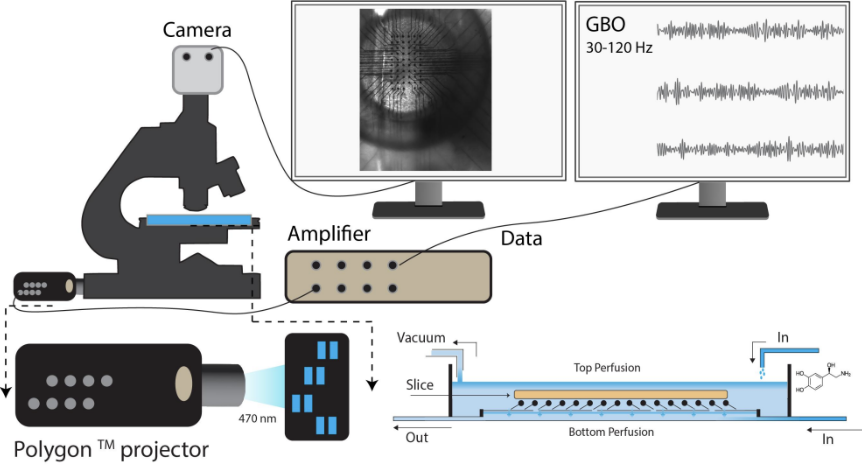
Optogenetic stimulation revealed altered SST- and PV-induced gamma-band oscillations (iGBO) in mutants, underscoring the critical role of GluN2A in regulating mPFC inhibitory tone and network activity. These findings highlight the interplay between GABAergic neurons and GluN2A signaling in mPFC, offering insights into SCZ-related cognitive deficits and potential therapies.