


A SCALABLE SOLUTION FOR EVOLVING RESEARCH NEEDS
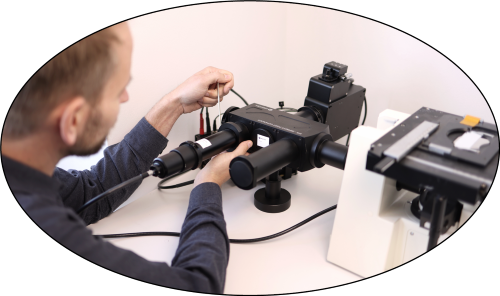
- Image multiple sensors simultaneously within the same recording site
- Wavelengths available for red and far red sensors
- Customizable, interchangeable excitation light sources and filter sets
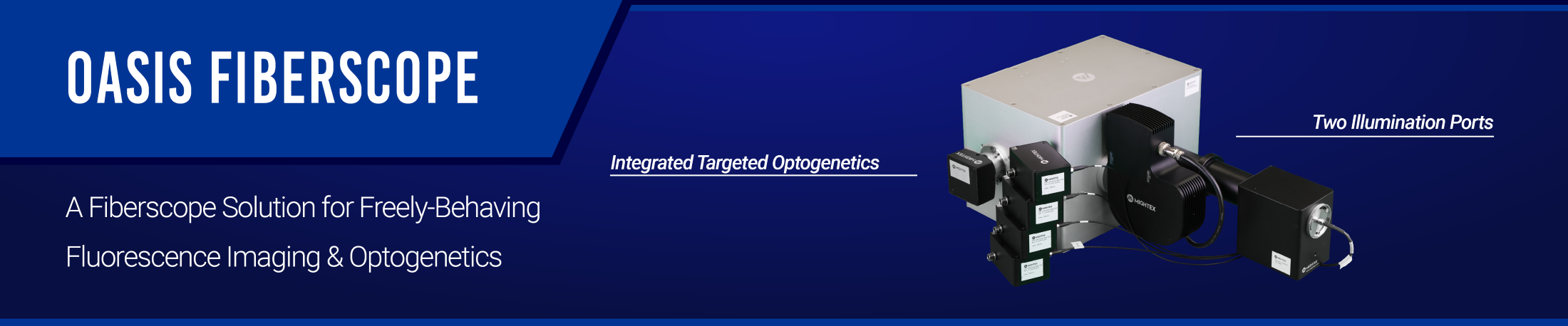
- Integrate multiple illumination sources through dual excitation ports
- Record from multiple brain regions simultaneously in the same animal
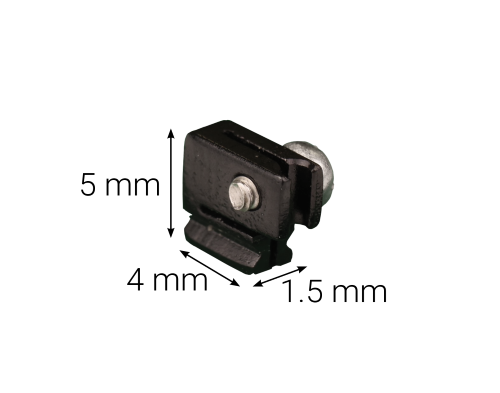
- Compact, and lightweight (0.7g) head mount design to minimize physical strain on animals and allow for better mobility and exploratory behaviour
- The small footprint allows compatibility with additional implants for electrophysiology or drug delivery
- Options are available for imaging wider FOVs or imaging through a cranial window

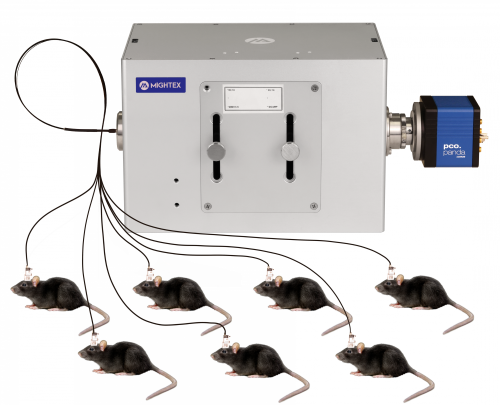
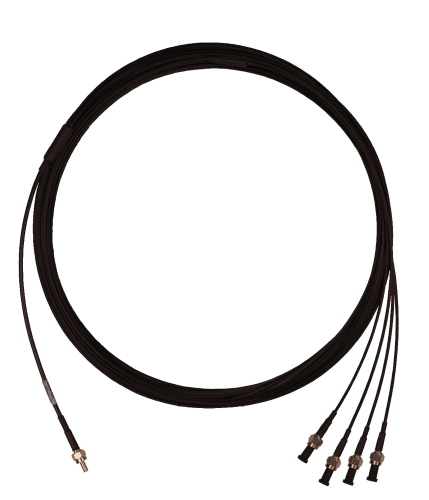
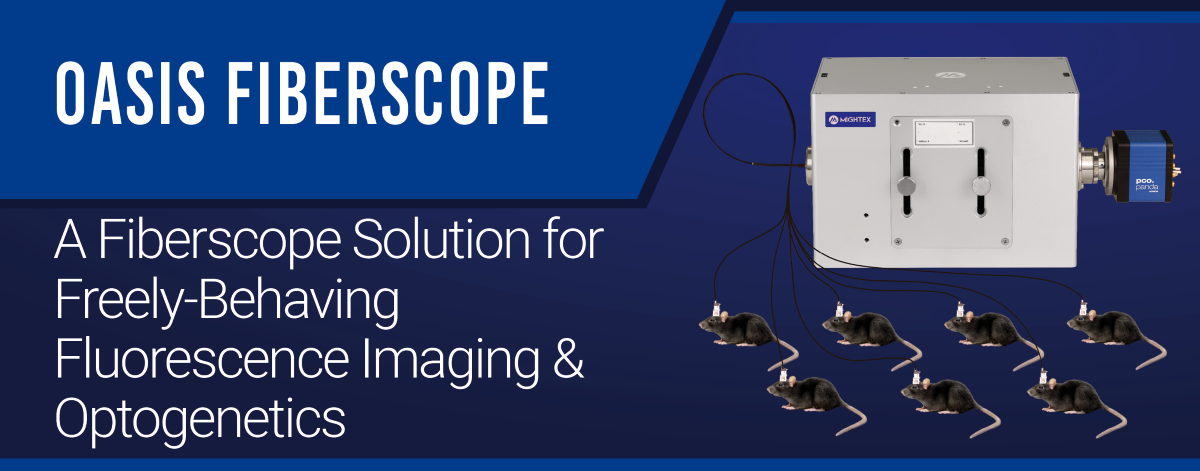
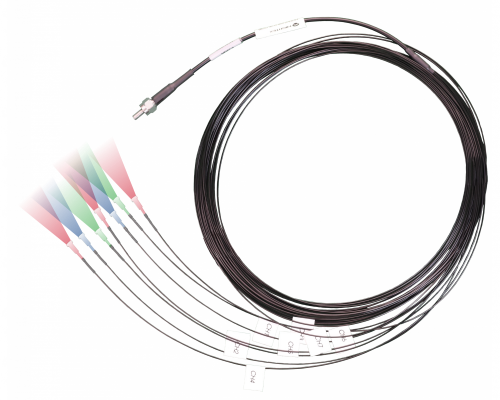
- Record and stimulate up to 7 regions or animals using branched fiber patch cords
- Configure high-throughput recording setups to generate large datasets faster and more efficiently
- Scale from single region experiments to complex, high-throughput studies without increasing system complexity
- Acquire data at hundreds of frames per second (up to 200Hz)
- Resolve the temporal dynamics of voltage sensors
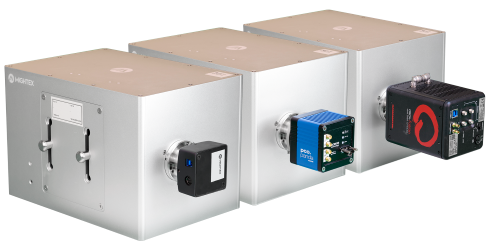
- Compatible with high-sensitivity cameras such as Photometrics and PCO
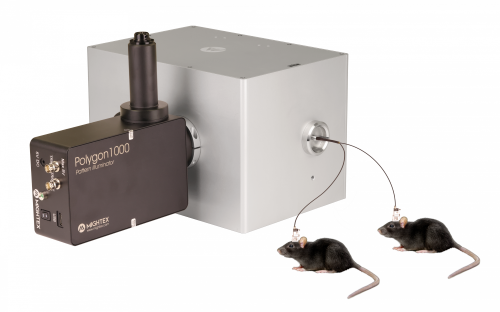
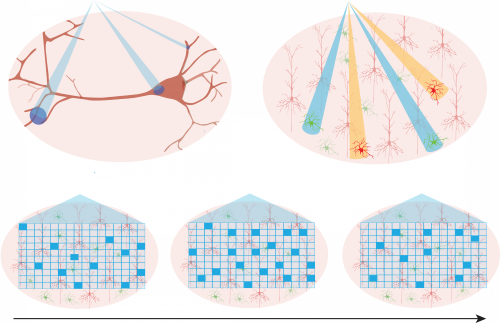
- Perform single-cell optogenetics with simultaneous imaging in freely behaving animals
- Integrate Mightex’s market-leading Polygon Pattern Illuminator with ease
- User-configured, complex spatiotemporal patterns allow you to dissect the function of individual neurons within a circuit

- Synchronize and trigger devices through our Polyecho Digital I/O controller compatible with a wide range of external devices
- Head mounts are free of electronics expanding their usability in a variety of environments with minimal risk for damage
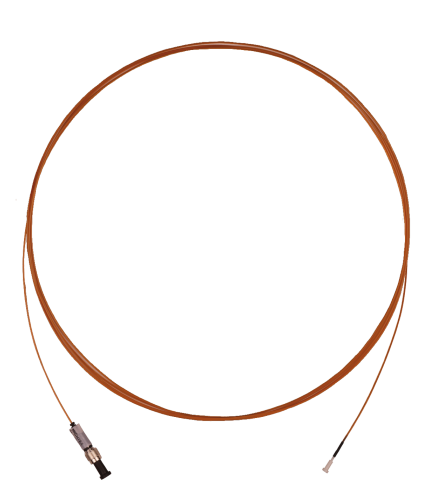
- Flexible, resilient imaging fibers available in lengths up to 3 meters to allow unrestricted animal movement
- In applications where twisting of the imaging fiber is a major concern, we also offer the OASIS ROAM, a variant of the OASIS Implant which incorporates an innovative rotation compensation mechanism.

WHY CHOOSE OASIS FIBERSCOPE?
Reconfigurable, Scalable, &
Built for High-Throughput Experiments
- Modular fiberscope platform that scales from single-animal, single-region experiments to high-throughput, multi-animal and multi-region experiments using interchangeable branched imaging fibers.
- Flexible system architecture enabling rapid reconfiguration of excitation sources, filter sets, cameras, and fiber bundles to support new sensors, wavelengths, and evolving applications without rebuilding the core platform.
- Designed to maximize data collection efficiency and reproducibility with large-scale, parallel experiments.

Lightweight Headmounts & Small Footprint Design
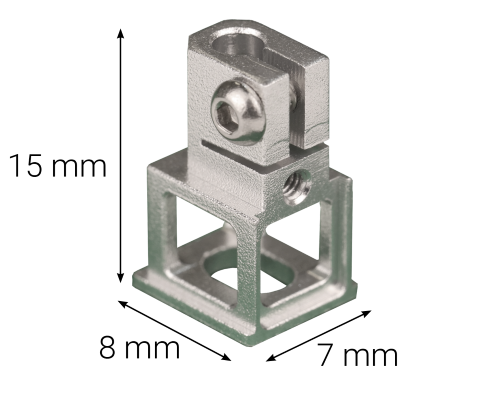
- Lightweight, compact headmounts (as small as 1.5 mm × 3 mm and ≈0.7 g) minimizing mechanical load, reducing stress, and preserving naturalistic behaviour in freely behaving animals.
- Imaging-fiber-based architecture separates all optics and electronics from the animal, enabling multi-region access without increasing headstage complexity.
- Enhanced safety and environmental compatibility by keeping all electrical and optical components off the animal, enabling water-based behavioural assays and MRI-compatibility.
- Small system footprint allowing seamless integration into crowded experimental setups and specialized environments where traditional microscope-mounted systems are not feasible.
Manipulate Neural Circuits with High Precision Using Polygon
- Spatially targeted optogenetics by integration of the Polygon DMD Pattern Illuminator with the OASIS fiberscope platform, allowing stimulation of defined regions or individual cells with cellular-level precision.
- Maximized signal-to-noise ratios for voltage imaging by restricting illumination to regions of interest, reducing background excitation and photobleaching.
- Closed-loop control uses real-time feedback from imaging or external triggers to dynamically generate stimulation patterns targeting specific cell populations.
Observe & Synchronize Neural Activity with Behaviour
- Unified PolyScan software provides centralized control and real-time visualization across imaging, stimulation, and synchronization hardware.
- PolyEcho Intelligent I/O Control Module delivers microsecond-precision synchronization across cameras, stimulators, behavioural devices, and third-party hardware.
- Event timestamp overlay allowing precise alignment of neural activity with behavioural and stimulus events during acquisition.
- Seamless integration with third-party hardware enabling complex, multi-threaded experiments without workflow fragmentation.
RECENT SUCCESS CASE
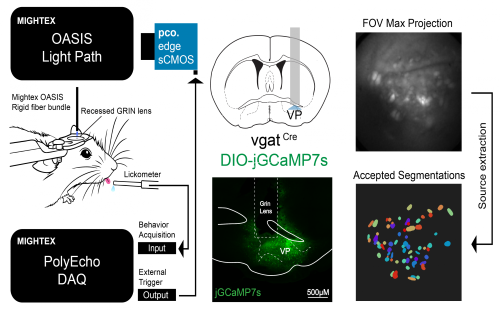
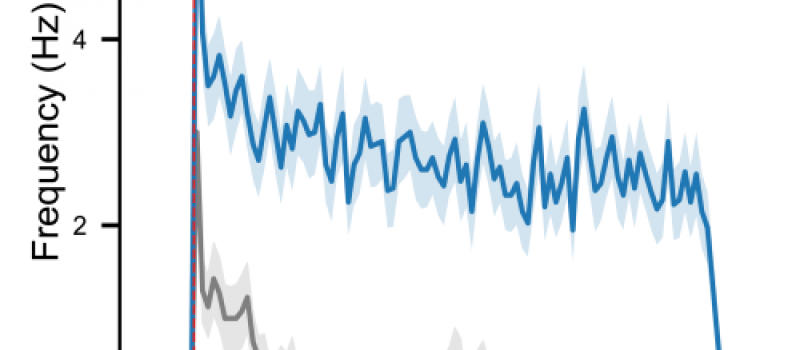
The Kravitz Lab investigates the circuits underlying hedonic feeding using cellular-resolution Ca2+ imaging and optogenetics during consumption of obesogenic foods. We used the Mightex OASIS Fiberscope to record Ca2+ dynamics from genetically identified ventral pallidum neurons (VPGABA and VPGlu) in awake, head-fixed mice. We observed proportionally similar levels of activation and inhibition during licking behaviour (high calorie Ensure reward) in VPGABA and VPGlu neurons. However, active VPGABA neurons had Ca2+ dynamics that scaled with consumption duration. This suggests that a subpopulation of VPGABA neurons is highly responsive to palatable reward consumption and might be a mechanistic target for suppressing hedonic feeding that underlies diet-induced obesity.
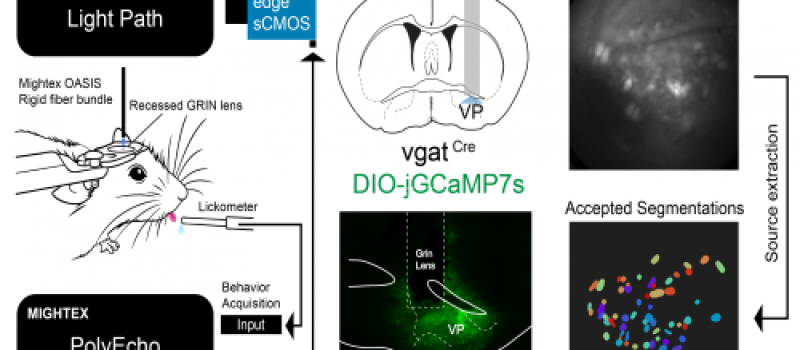
The OASIS Fiberscope’s integration with a scientific-grade camera (pco.panda sCMOS) enabled these cellular-resolution recordings through superior spatial resolution, sampling rates, and illumination control. The Mightex PolyScan4 acquisition software facilitated reliable synchronization of Ca2+ imaging with behavioural timestamps, allowing precise alignment of neural activity with licking microstructure and consumption duration.


Justin G. Wang is a doctoral trainee in the Neurosciences program at Washington University in St. Louis., enrolled since 2020, under the supervision of Alexxai V. Kravitz, PhD. He earned his undergraduate degree from New York University in 2018. His research focuses on dissecting striatopallidal circuits that modulate feeding behaviour, with the goal of advancing our understanding of neural mechanisms underlying motivation and appetite.

Dr. Alexxai V. Kravitz is an Associate Professor of Neuroscience and Anesthesiology and serves as Interim Division Director for Basic Neuroscience at Washington University in St. Louis. His research focuses on basal ganglia circuitry and how its function is altered in disease states such as obesity, addiction, and anxiety disorders. Under normal conditions, his work examines how basal ganglia networks drive the selection of adaptive behavioural outcomes, providing insight into both healthy and pathological brain function.

“The Mightex OASIS imaging system has been reliable and highly customizable, with seamless integration between the acquisition box, behavior camera, and PolyScan4 software that enables synchronized calcium imaging and behavioural recording, streamlining our workflow and allowing precise alignment of neural activity with behaviours of interest. ”
— Justin G. Wang, Doctoral Trainee at Washington University in St. Louis
— Alexxai V. Kravitz, Associate Professor at Washington University in St. Louis
OUR PORTFOLIO OF CELLULAR RESOLUTION IN VIVO IMAGING SYSTEMS
Fiberscope
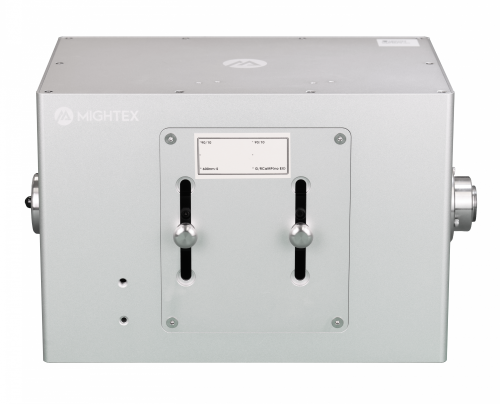
- Our standard OASIS Fiberscope system maximizes versatility, modularity, and resolution.
- Customize for any application with interchangeable light sources, filter sets, and cameras.
ROAM

- A variant of the OASIS Fiberscope, the ROAM system incorporates an innovative optomechanical rotation compensation mechanism.
- This allows 360 degree rotation of the imaging fiber while maintaining a stable imaging FOV.
- Useful for specific single-fiber imaging applications in which twisting of the fiber is a major concern.
Large FOV

- This version expands the FOV up to 3.2 mm for applications such as cranial window imaging.
- Useful for applications aimed at studying larger cell populations.
To see our full selection of Fibermounts and Fiber Patch Cords, and Surgical Tools Click Here
SUPPORT & DEVELOPMENT
We provide comprehensive remote and in-person support throughout every stage of your experiment. From initial system installation and configuration to advanced experimental workflows, our technical and applications teams work closely with you to ensure reliable performance and smooth integration into your lab environment. Support is available for troubleshooting, optimization, and experimental planning, with responsive follow-ups to keep your research moving forward. Leveraging our global distributor network, we ensure consistent, high-quality support for users worldwide.
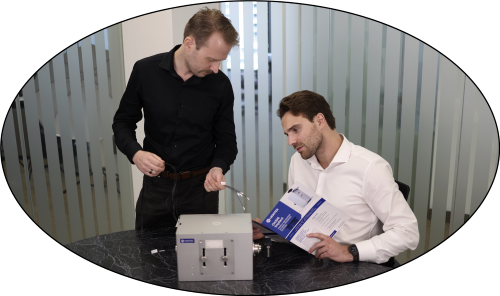
Our training programs are designed to help users quickly gain confidence and proficiency with both hardware and software. We offer detailed instruction on system setup, operation, and maintenance, as well as guidance on experimental workflows and best practices. For applications that require it, we also provide training on surgical procedures and preparation techniques relevant to optical imaging and optogenetics. Training can be delivered remotely or on-site, depending on your needs, and is tailored to the experience level and research goals of your team.

We maintain a robust online resource library to support your research beyond direct technical assistance. These resources include application notes, e-books, recorded webinars, tutorials, and references to relevant peer-reviewed publications. Designed to support both new and experienced users, our materials provide practical guidance, troubleshooting tips, and real-world examples to help you refine experimental design, improve data quality, and stay informed about emerging techniques.


We provide comprehensive remote and in-person support throughout every stage of your experiment. From initial system installation and configuration to advanced experimental workflows, our technical and applications teams work closely with you to ensure reliable performance and smooth integration into your lab environment. Support is available for troubleshooting, optimization, and experimental planning, with responsive follow-ups to keep your research moving forward. Leveraging our global distributor network, we ensure consistent, high-quality support for users worldwide.